
By DANIAL FUAD
In the folklore of the Tao people of Pongso no Tao (Orchid Island), there is a saying: “Every big fish has a fisherman’s name written on its back”. Inspired by this, Taiwanese choreographer Wang Yeu-kwn packed a fishing rod and journeyed to Indonesia in 2019, intent on finding a fish as heavy as himself.
He didn’t catch a fish. Instead, he found Danang Pamungkas, a former colleague from the world-renowned Cloud Gate 2 dance company.

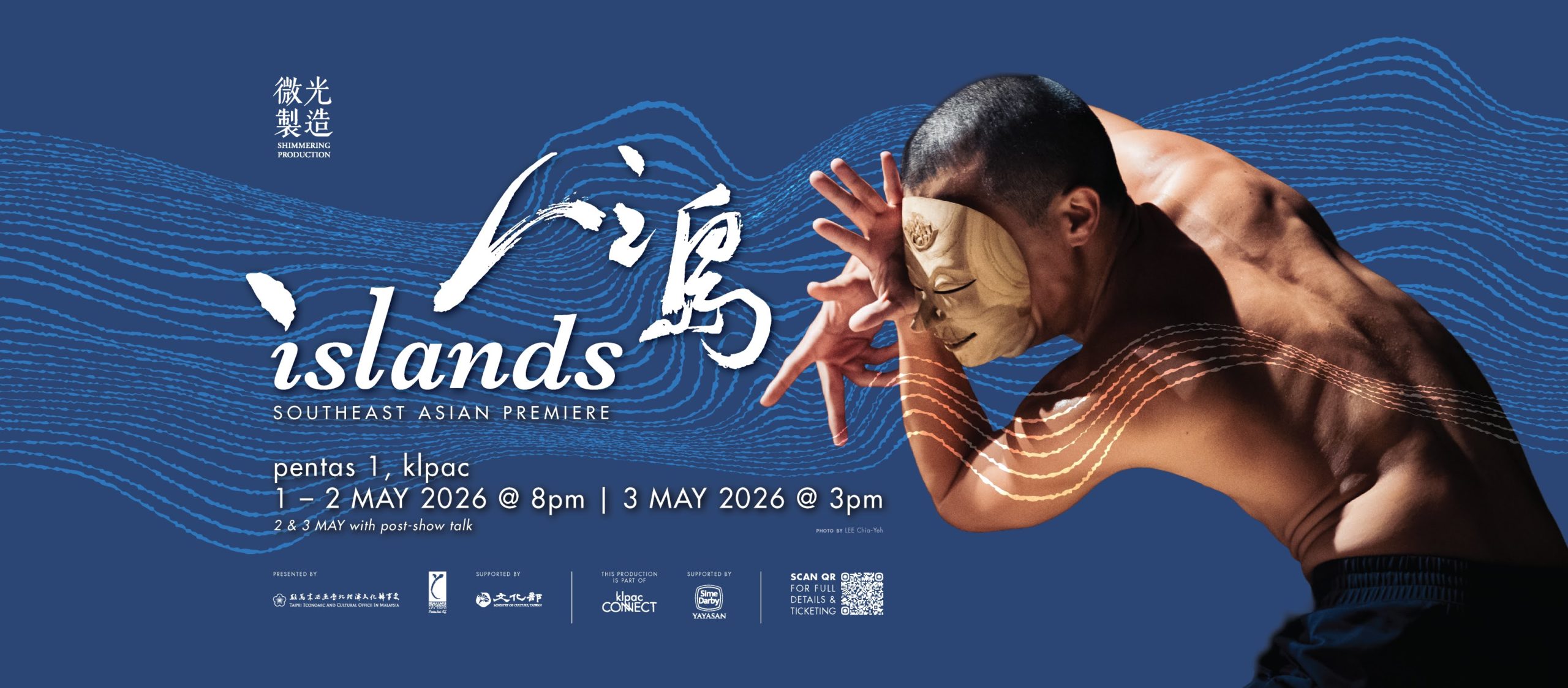
That serendipitous reunion birthed Islands (人之島), a profoundly intimate dance duet that will make its Southeast Asian premiere at Pentas 1, The Kuala Lumpur Performing Arts Centre (klpac) from May 1 to 3, 2026. As the second episode of Wang’s ambitious Trilogy – Quest of Relationships, Islands is a stunning meditation on identity, gravity, and the shifting spaces between two people.
Ahead of the premiere, Wang offered a deeper look into his creative philosophy, the physical rigors of cross-cultural collaboration, and how a giant black airbag became the third performer on stage.
The Choreographer as a Slow Fisherman

Wang is a certified fisherman, and his approach to choreography is remarkably similar to casting a line: it involves a lot of waiting. However, for Wang, this is not merely patience.
“For me, both choreographing and fishing are ways to rediscover myself,” he explains. “Rather than calling it ‘patience,’ I see it more as a continuous process of peeling back the layers. Driven by a curiosity about the unknown landscapes that lie ahead, I choose to move forward slowly, step by step.”
This ethos permeated the rehearsal room for Islands. Rather than rushing to pre-set emotions or choreograph beautiful, polished movements, the duo spent hours practicing “doing nothing.” “We simply kept pushing, pulling, and surrendering our weight to one another,” Wang says. “We waited for the body to naturally yield its most honest reactions after experiencing extreme physical labor and exhaustion. The emotions in this piece are never acted out.”
Breathing Through the Topeng
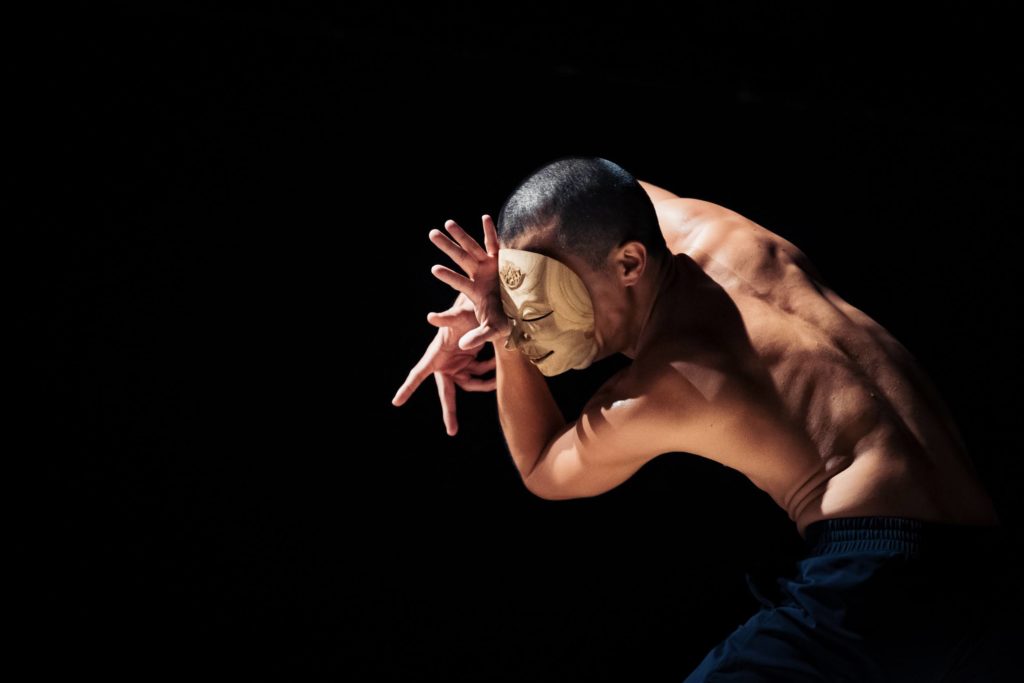
A pivotal moment in the duet occurs when Pamungkas introduces Wang to the topeng, traditional Indonesian masks. Wearing the mask is a physically punishing experience: it must be held in place by biting down on it, it drastically obstructs vision, and it severely restricts breathing.
“Putting on the mask… instantly plunging the body into an intensely vulnerable and restricted physical state,” Wang describes. Yet, this sensory deprivation forces a profound internal shift. “In those moments when I can no longer see the boundaries of the stage and am gasping for air, I have to rely entirely on the sensitivity of my skin and the swaying of my center of gravity to truly perceive the existence of ‘myself’.”
He notes that this forced physiological limitation strips away all external distractions. “I am left with nothing but the sound of my own heartbeat, allowing my body to dance to that deepest and most honest rhythm.”
Wrestling with the Elements
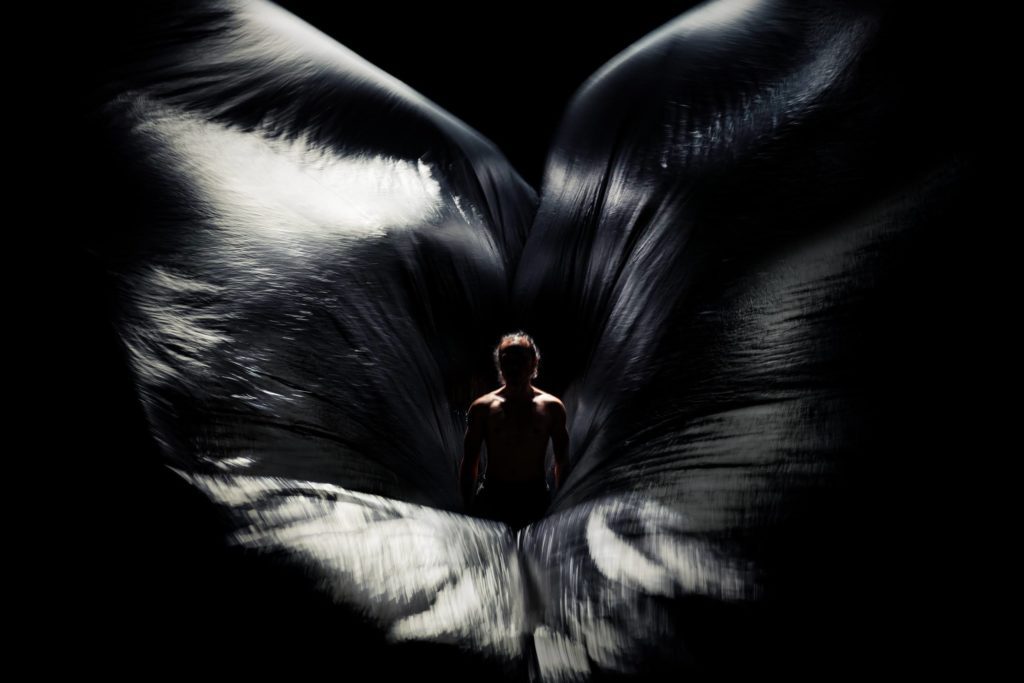
Islands does not just feature two dancers; it introduces a massive, unpredictable third entity. Courtesy of set designer Chen Guan-lin, a giant black plastic airbag occupies the stage. While one might assume it represents the ocean, Wang reveals it is actually a physical manifestation of the “flow of air.”
“Just like the body’s ‘center of gravity,’ it is invisible to the naked eye, yet we can viscerally feel its presence and weight,” Wang notes. “This constantly deforming, giant black entity resembles an unstable, ever-floating island.”
The dancers do not merely use the airbag as a prop; they must actively wrestle and coexist with it. “When we push against it and lose our balance, the airbag’s undulations… will in turn pull at our footsteps, altering our breath and rhythm,” he explains. “This is, in essence, a co-breathing theatrical ecosystem.”
Expanding the Dimension of Inquiry
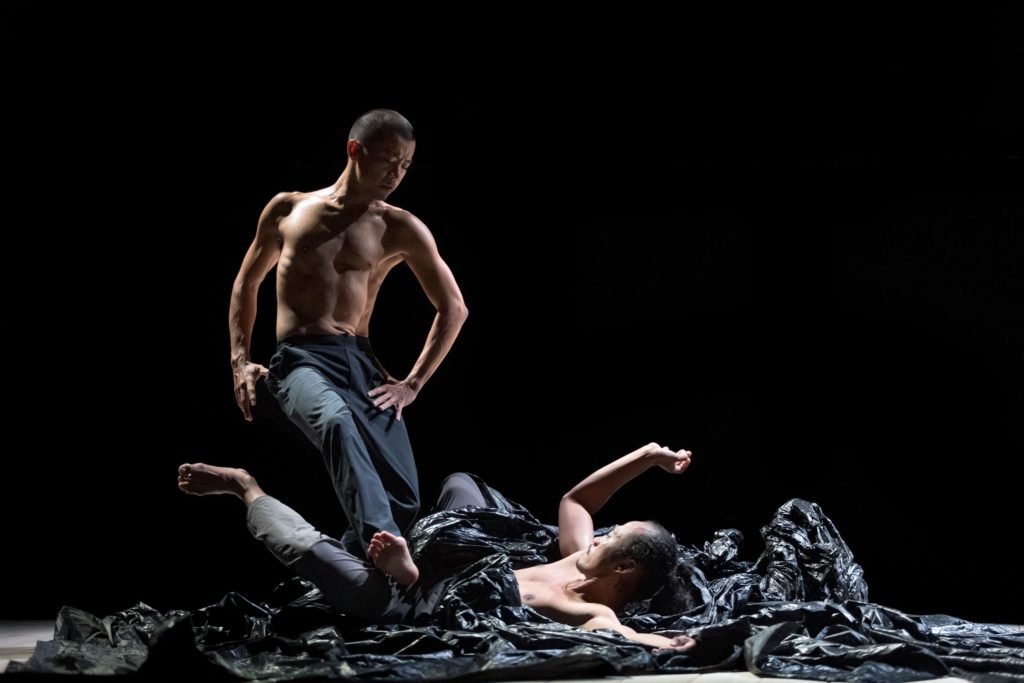
While the first part of his trilogy, Beings, was a direct inquiry into the relationship between individuals, Islands expands the lens to examine the connections between people, islands, and cultures.
“We realize that we are, in fact, two independent islands, each with our own distinct shapes and historical traces,” Wang reflects on his partnership with Pamungkas. “Relationships are no longer about forcing conformity, but rather about understanding and accepting that distance—both our similarities and our differences.”
After dancing with Cloud Gate 2 for years, forming his own company, Shimmering Production, allowed Wang the independence to stop trying to “prove something” and instead focus on “telling a story”. “I began to focus on shaving the work down, making it thinner and purer,” he says.
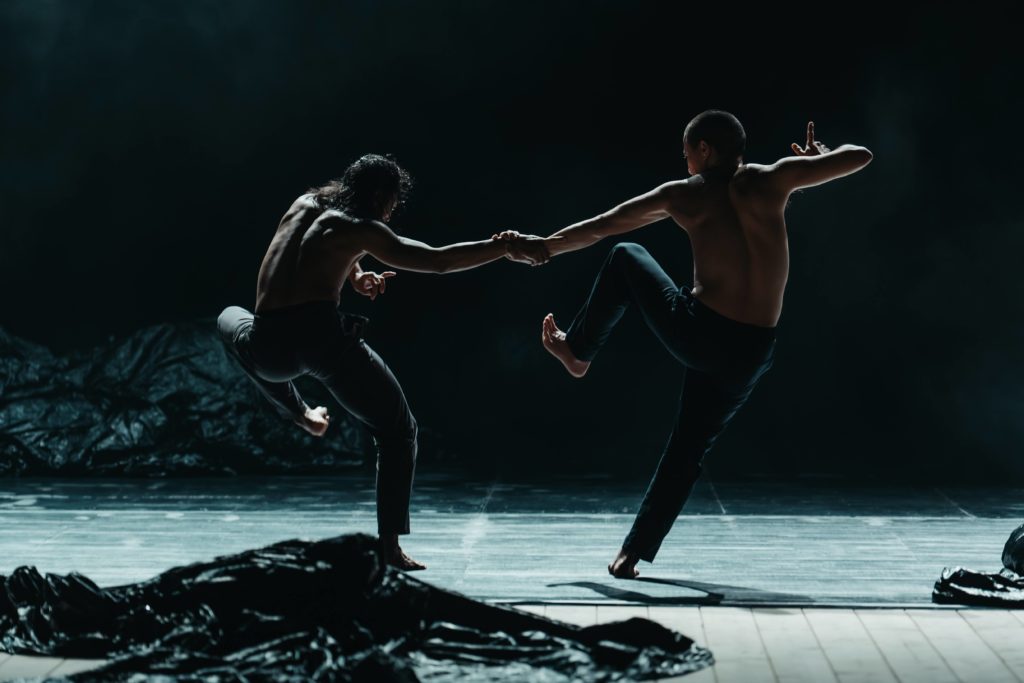
Islands promises to be a stunning display of that purity—a dance where breath, balance, and weight collide in the dark, shimmering light. The final chapter of his trilogy, Remains, slated for 2027, will zoom out even further to explore the relationship between humanity and the world. If Islands is any indication, it will be a journey worth waiting for.
Islands was co-commissioned by the National Theater & Concert Hall, National Kaohsiung Center for the Arts (Weiwuying).
Wang Yeu-Kwn: Islands 人之島 will have its Southeast Asian Premiere at Pentas 1, klpac from 1 to 3 May 2026. For ticketing and more information, please visit klpac ticketing page.
Read other interesting article on BASKL by following the link below: